Low body corporate levies can be attractive to property owners, but they don’t necessarily mean a building is financially well managed.
A scheme may comfortably meet its day-to-day expenses while failing to set aside enough money for major repairs, maintenance and the replacement of ageing building assets.
At Olive Tree Consulting Group, our experience inspecting buildings and preparing sinking fund forecasts suggests that many bodies corporate are not contributing enough towards their long-term capital expenditure requirements.
For schemes that have been underfunded for years, substantial increases in contributions may be necessary to meet future obligations.
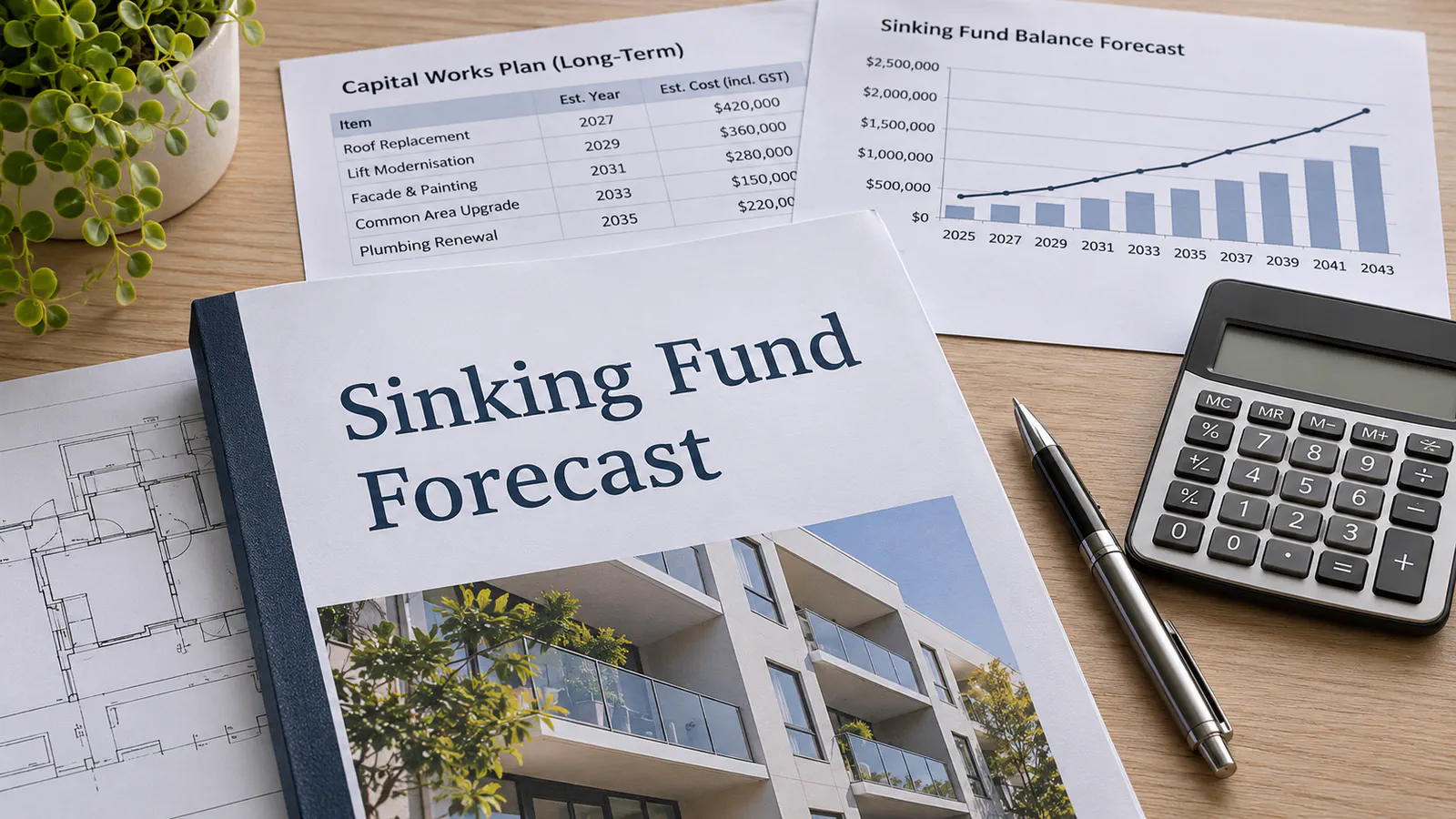
A well-prepared Sinking Fund Forecast in Queensland, or Capital Works Fund Plan in New South Wales, helps owners understand these costs, plan ahead and reduce the risk of unexpected financial pressures.
The Problem with Keeping Levies Too Low
Much of the discussion surrounding rising body corporate levies focuses on insurance premiums, management fees and other operating expenses.
While these costs are important, another issue deserves equal attention: are owners contributing enough to maintain the building itself?
Major expenditure can include:
- Concrete deterioration and structural repairs.
- Roof replacement and waterproofing works.
- Building repainting and façade maintenance.
- Lift refurbishment or replacement.
- Fire safety system upgrades.
- Replacement of common property windows, doors and other building components.
Some of these expenses result from unexpected defects, while others are foreseeable replacements of assets approaching the end of their useful life.
The problem arises when several major projects become necessary within a relatively short period, but the body corporate has insufficient reserves to fund them.
Owners may then face substantial special levies, borrowing costs or the possibility of deferring important works.
Delaying necessary repairs can also allow deterioration to progress, potentially increasing the overall cost.
Although special levies are sometimes unavoidable, foreseeable capital expenditure should not repeatedly become a financial emergency simply because contributions have been kept too low.
A Sinking Fund Forecast Must Reflect the Building’s Actual Needs
In Queensland, body corporate schemes operating under the Standard, Accommodation, Commercial and Small Schemes Modules must prepare a sinking fund budget that provides for the current financial year and anticipated major expenditure over at least the following nine years.
While engaging a professional consultant to prepare a sinking fund forecast is optional, the underlying budgeting requirements remain.
In New South Wales, owners corporations generally require a 10-year Capital Works Fund Plan, reviewed at least every five years. Since 1 April 2026, new and revised plans must use the prescribed standard form, subject to applicable exemptions.
However, meeting the minimum planning requirements does not automatically mean a scheme is adequately funded.
A reliable forecast should reflect the property’s:
- Age, building type and overall condition.
- Existing infrastructure and major building assets.
- Maintenance and repair history.
- Anticipated capital works and replacement requirements.
- Current quotations and specialist recommendations.
- Available funds and projected future contributions.
A healthy bank balance today does not necessarily mean sufficient funding will be available when significant expenditure becomes due.
The real question is whether the body corporate will have enough money available when major repairs and replacements are required.
Better Information Leads to More Accurate Forecasts
The quality of a sinking fund forecast depends heavily on the information available to the consultant.
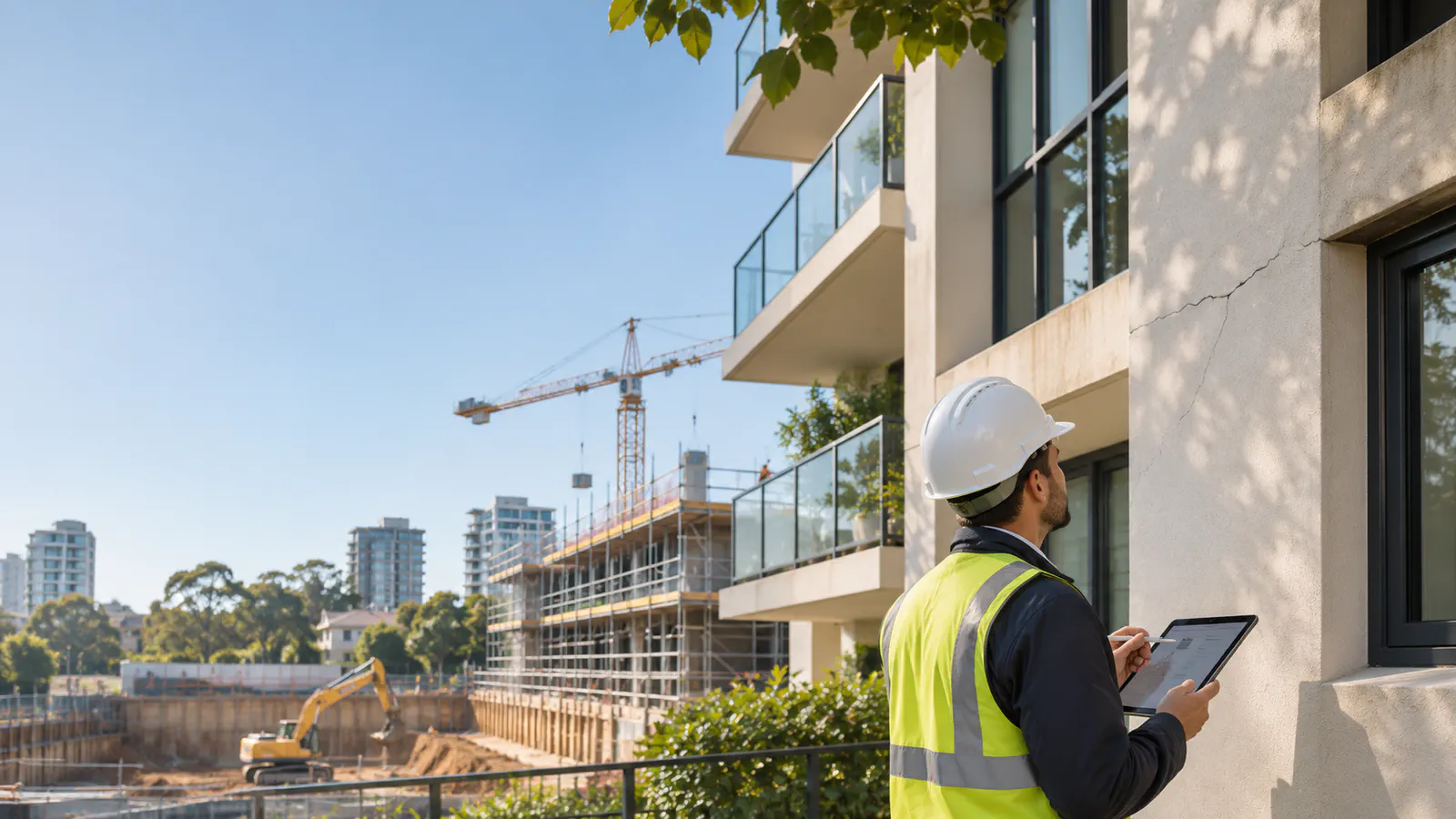
An onsite visual inspection provides valuable information about the building’s condition. However, it cannot identify every concealed defect or determine the internal condition of all mechanical, electrical and hydraulic equipment.
Where there are known concerns, additional investigations may be necessary.
For example, a Building Condition Assessment or specialist engineering inspection may help identify the extent, urgency and likely cost of:
- Concrete spalling and structural deterioration.
- Water ingress and waterproofing failures.
- Building movement and cracking.
- Deteriorating roofing or façade elements.
- Recurring defects and maintenance issues.
These investigations can provide more reliable information for determining when works are likely to be required and what financial allowances should be made.
Without this information, the forecast may rely too heavily on general replacement cycles and assumptions.
Ask Your Service Contractors About Future Replacement Costs
Regular service contractors can provide valuable insight into the condition and remaining useful life of major building equipment.
Lift, fire safety, mechanical ventilation, hydraulic and other specialist contractors should be encouraged to provide information beyond their routine service records.
For example, a lift contractor may identify that the lift controls or other components require upgrading before a complete lift replacement becomes necessary.
Similarly, a fire services contractor may identify ageing pumps, deteriorating equipment or other components likely to require replacement in the coming years.
Where possible, committees should request information about:
- The condition of existing equipment.
- Anticipated repairs, upgrades or replacements.
- Estimated remaining useful life.
- Indicative replacement costs.
- Potential lead times and access requirements.
Although remaining life estimates are not guarantees, this information can significantly improve the accuracy of future capital expenditure allowances.
It can also help prevent situations where major equipment unexpectedly reaches the end of its serviceable life without adequate funding in place.
Involve People Who Know the Building
One of the most valuable parts of preparing a forecast is speaking with someone who understands the property’s history.
A caretaker, building manager, long-standing committee member or other knowledgeable representative can often identify issues that may not be obvious during a single inspection.
These discussions may uncover previous water ingress problems, recurring maintenance issues, completed repairs and major projects that have been considered but not yet undertaken.
Where available, the consultant should also be provided with relevant:
- Building condition and engineering reports.
- Maintenance records and contractor recommendations.
- Details of completed capital works.
- Previous repair costs and warranties.
- Current quotations and proposed project scopes.
This background information helps produce a forecast that reflects the actual building rather than relying solely on its age and general condition.
Provide Existing Quotations Before the Forecast Is Finalised
Where a body corporate already has quotations for upcoming capital works, these should be provided to the consultant.
This may include projects such as building repainting, lift upgrades, waterproofing, concrete repairs, roof replacement or building modernisation.
It is also important to explain whether the proposed works have been approved, remain under consideration or require further investigation.
The consultant can then review the quotations, consider any exclusions or additional costs and incorporate appropriate allowances into the forecast.
Older quotations may require updating to reflect current market conditions, but they can still provide useful guidance.
The more accurate the information provided, the more useful the forecast becomes for budgeting and long-term planning.
Funding Must Follow the Forecast
Identifying future expenditure is only part of the process.
The body corporate must also consider how those works will be funded.
Where a forecast identifies a significant shortfall, committees and owners may need to consider increasing regular contributions, introducing a catch-up levy or adopting a combination of funding measures.
While affordability is an understandable concern, reducing contributions does not remove the underlying maintenance and replacement obligations.
It simply leaves the body corporate with less money available when the work becomes necessary.
Any proposed increases should consider the timing and urgency of upcoming expenditure, particularly where substantial projects are expected in the short to medium term.
Review Your Forecast as the Building Changes
A sinking fund forecast should not be prepared and then forgotten.
Building conditions, construction costs and maintenance priorities change over time.
New defects may be identified, projects may be completed earlier than expected, or specialist contractors may revise their recommendations.
Committees should therefore review the forecast during their annual budgeting process and consider whether any significant changes require an updated assessment.
This is particularly important where major capital works are being planned or where the building has experienced unexpected deterioration.
Early planning also provides more time to obtain specialist advice, compare quotations and arrange contractors before works become urgent.
Are Body Corporate Levies Really Enough?
Comparing contributions between similar strata schemes can be useful, but averages do not necessarily indicate appropriate funding.
A townhouse development, high-rise residential building and large resort-style complex can have vastly different capital expenditure requirements.
Even two buildings of similar age and size may have different financial needs due to their construction, maintenance history and existing infrastructure.
If the schemes being used for comparison are themselves underfunded, matching their contributions may simply repeat the problem.
In a future article, we will explore sinking fund and capital works levy benchmarks across different property types and consider what these comparisons can tell us.
However, the most important measure will always be the anticipated expenditure of the individual scheme.
Plan Ahead and Avoid Unnecessary Financial Pressure
Buildings cannot be maintained indefinitely on inadequate capital funding.
A well-prepared sinking fund forecast helps bodies corporate understand their future obligations, identify potential shortfalls and plan contributions more effectively.
The objective should not simply be to keep levies as low as possible.
It should be to collect realistic contributions, spread foreseeable costs over time and ensure sufficient funding is available when major works are required.
Need an Updated Sinking Fund Forecast?
Olive Tree Consulting Group prepares independent Sinking Fund Forecasts in Queensland and Capital Works Fund Plans in New South Wales.
Our experienced consultants assess common property assets, review available maintenance information and consider upcoming capital works to help bodies corporate plan for future expenditure.
Whether your scheme requires a new forecast or an update to reflect recent building works, maintenance concerns or changing costs, our team can assist.
Contact Olive Tree Consulting Group to discuss your sinking fund or capital works planning requirements.